

Commercial Backflow Prevention: What Facility Managers Need to Know
Categories: Maintenance | Plumbing
Commercial plumbing systems do more than deliver water to sinks and restrooms. Depending on the facility, the water supply may also connect to boilers, hydronic systems, fire protection equipment, irrigation, commercial kitchens, process equipment, and other building systems. Each connection introduces conditions that need to be considered when protecting the building’s potable, or drinking, water supply.
Backflow prevention is an important part of that protection. A properly selected and maintained backflow prevention assembly helps keep water or other substances from flowing in the wrong direction and potentially contaminating the potable water system.
Table of Contents
What Backflow Is
Under normal operating conditions, water moves through a plumbing system in its intended direction: from the potable water supply toward fixtures, equipment, and other points of use. Backflow occurs when water reverses direction within the system.
The concern is not only that water moves backward. If a connection exists between the potable water system and a non-potable source, that reversal can create an opportunity for contaminants to enter the drinking water supply.
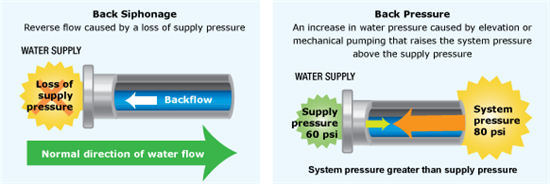
Backflow generally occurs through one of two conditions: backpressure or backsiphonage. Simply put, backpressure results from an issue with the downstream connection, while backsiphonage occurs due to the pressure of the potable water supply.
Backpressure
Backpressure occurs when pressure on the downstream side of a connection becomes greater than the normal pressure of the potable water supply. Without appropriate backflow protection, that pressure difference can force downstream water back toward the potable system.
Commercial systems that can create backpressure conditions include:
- Boilers and hydronic heating systems
- Pumps and pressurized piping
- Industrial and process equipment
- Chemical feed systems
- Other equipment operating at pressures above the incoming water supply
Backsiphonage
Backsiphonage occurs when pressure in the potable water supply drops below normal, making the pressure of the downstream side of a connection higher. The resulting negative pressure can create a siphoning effect that pulls non-potable water or other substances toward the drinking water system.
A significant pressure drop can result from conditions such as:
- Water main breaks
- High water demand
- Firefighting activity
- Water supply interruptions
- Other events that reduce distribution-system pressure
These events may originate outside the building, which is one reason a plumbing connection that functions normally every day can still present a backflow risk under abnormal pressure conditions.
How Cross-Connections Create Contamination Risks
A cross-connection is a connection or potential connection between a potable water system and a non-potable system or source. In commercial and industrial facilities, cross-connections can occur in many places.
Cross-connections are commonly associated with:
- Boiler and hydronic systems
- Irrigation systems
- Fire protection systems
- Commercial kitchen equipment
- Laboratory or medical equipment
- Chemical feed systems
- Industrial and manufacturing processes
- Mechanical equipment
- Service sinks and hose connections
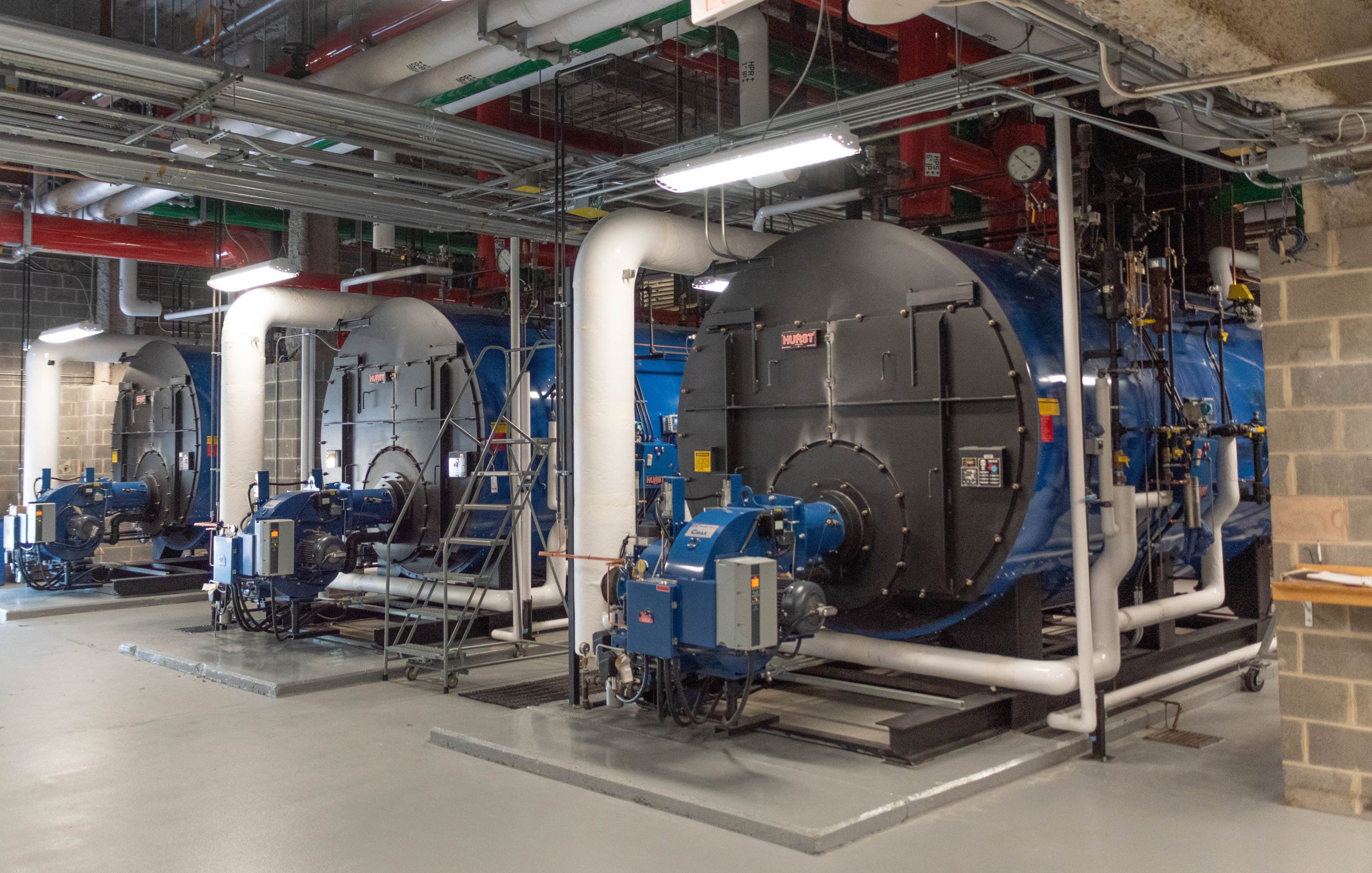
Not every cross-connection presents the same level of risk. The degree of hazard associated with the connection is an important factor in determining what type of backflow protection is appropriate.
Types of Backflow Preventers in Commercial Buildings
Different backflow prevention devices and assemblies are designed for different applications. Selecting the correct protection depends on the type of backflow that could occur, the degree of hazard, system conditions, and requirements established by the applicable authority.
Some of the most common types you may encounter include the following.
Selecting the Correct Backflow Protection
No single backflow preventer is appropriate for every situation.
Selection should account for:
- Whether backpressure, backsiphonage, or both could occur
- The degree of hazard presented by the cross-connection
- Equipment and system operating conditions
- Installation location
- Drainage requirements
- Accessibility for inspection and testing
- Applicable plumbing and cross-connection requirements
- Local water authority requirements
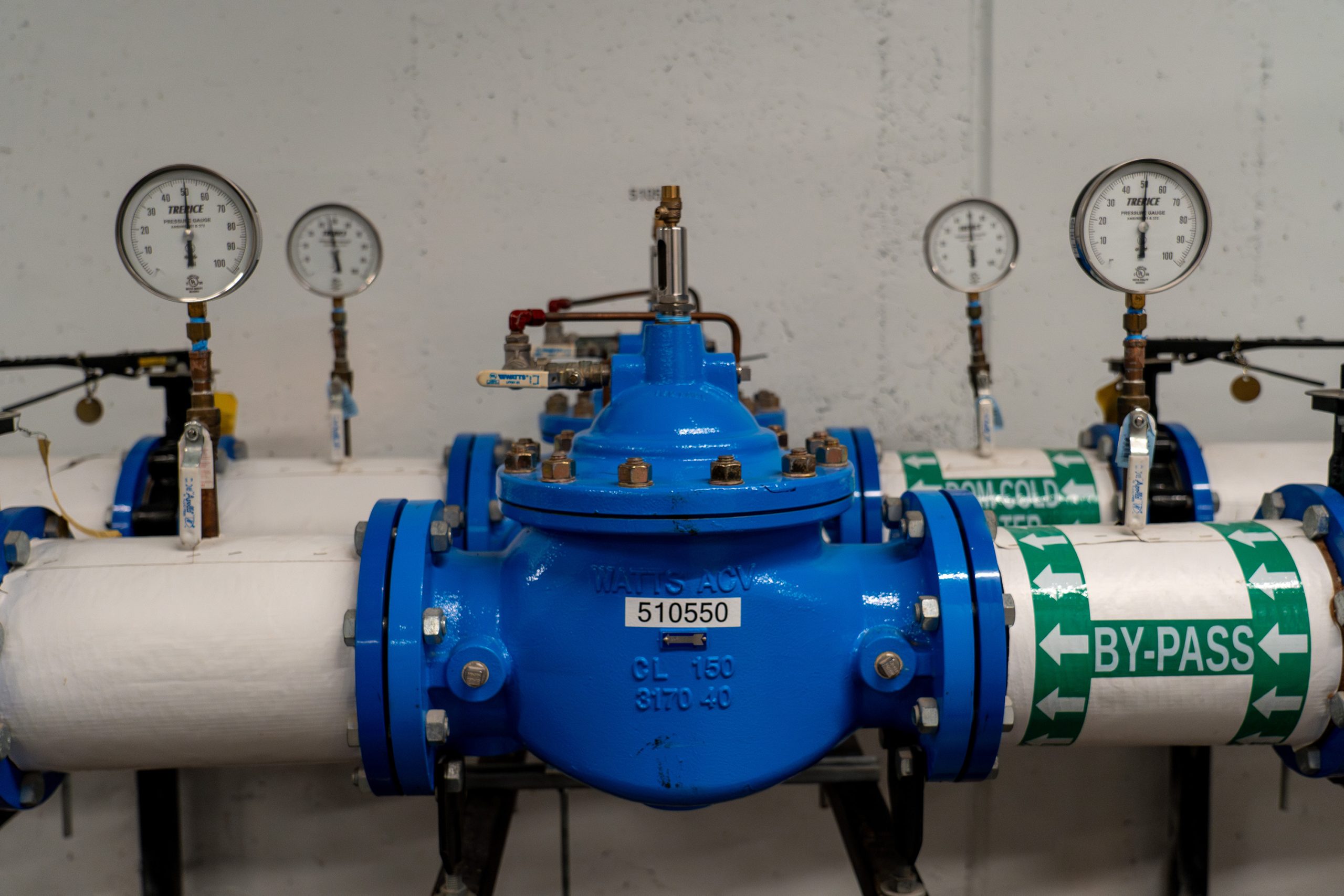
This becomes particularly important when equipment or plumbing systems are modified. Replacing an assembly based only on what was previously installed does not necessarily confirm that the protection remains appropriate for the current application.
Why Backflow Preventers Require Routine Testing
Backflow prevention assemblies are mechanical devices. Their internal components are exposed to water pressure, movement, mineral deposits, debris, and normal wear over their service life. A device can look normal from the outside while an internal component is no longer operating as intended.
Potential causes of backflow preventer problems include:
- Worn seals and internal components
- Debris preventing a check valve from seating correctly
- Mineral or scale accumulation
- Corrosion
- Damaged check valves
- Relief valve problems
- Freeze damage
- Pressure-related wear
- Improper repairs or system modifications
During a test, if an assembly fails, the cause can then be investigated. Depending on its condition, the appropriate response may involve cleaning, repairing, replacing components, or replacing the assembly. Retesting verifies whether the corrective work restored acceptable performance.
From a preventative maintenance standpoint, this process is valuable. It identifies deterioration when otherwise it may be assumed that the backflow preventer is working properly.
Virginia and Local Water Authority Requirements
Virginia establishes requirements related to cross-connection control and backflow prevention, while local water authorities may have their own procedures for administering their programs. Requirements can therefore depend on the facility, water supplier, type of assembly, application, and jurisdiction.
A qualified service contractor like RBI can help facility managers identify applicable requirements and manage ongoing responsibilities such as:
- Which backflow prevention assemblies must be tested
- Required testing frequency
- Testing and certification deadlines
- Tester qualification or certification requirements
- Required testing forms
- How and where test results must be submitted
- Requirements following a failed test
- Repair and retesting deadlines
- Requirements for newly installed or replaced assemblies
- Recordkeeping requirements
This is especially important for organizations operating multiple facilities. A company with properties in different parts of Virginia may encounter different administrative processes or local requirements from one water authority to another.
Backflow Prevention Checklist for Facility Managers
A structured approach can make backflow compliance easier to manage across a facility or portfolio. Facility managers don’t need to navigate every testing requirement, maintenance need, or documentation detail on their own. Working with an experienced service contractor, like RBI, can help keep testing on schedule, address maintenance needs, maintain accurate records, and support ongoing safety and compliance requirements.
Adding equipment, modifying boiler or hydronic piping, changing processes, renovating plumbing systems, or changing how a building is used can introduce new cross-connections or alter existing hazards. These changes should prompt a review of the facility's backflow protection.
Commercial Backflow Prevention FAQs
Building Backflow Testing Into Preventative Maintenance
Backflow testing can be easy to treat as a once-a-year compliance task: schedule the test, submit the paperwork, and revisit it the following year. A preventative maintenance approach looks beyond the test date.
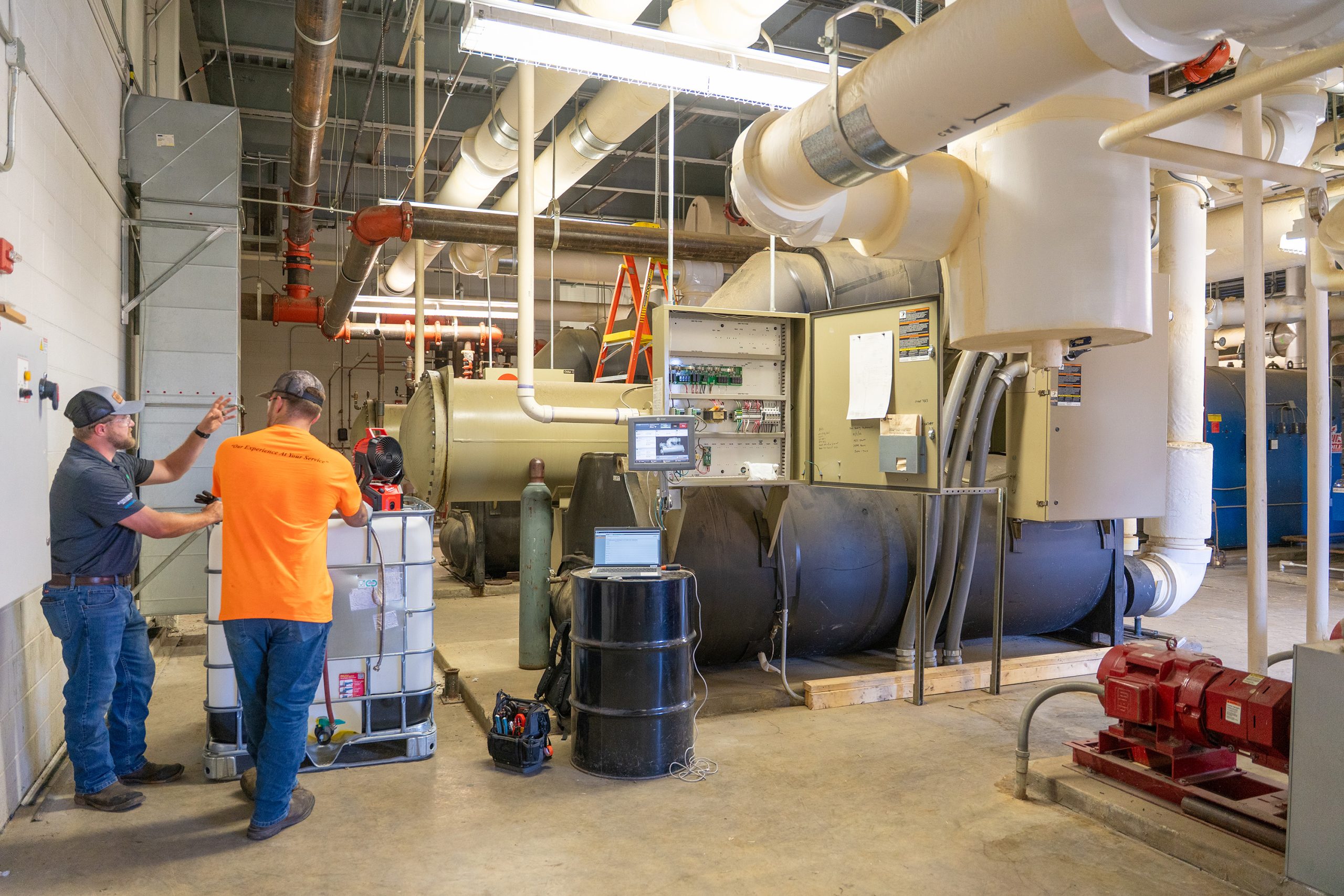
A planned approach can help facilities stay ahead of:
- Failed backflow tests
- Worn or damaged internal components
- Missed testing and certification deadlines
- Compliance issues with local water authorities
- Unexpected repair needs
- Operational disruptions caused by last-minute corrective work
For facility managers responsible for multiple plumbing and mechanical assets, the goal is not simply to pass the next backflow test. It is to maintain reliable systems, documented compliance, and a proactive maintenance plan that protects the facility over the long term.
RBI supports commercial and industrial facilities with:
- Backflow testing
- Backflow certification
- Commercial plumbing maintenance, repair, and system support
Incorporating these needs into a broader preventative maintenance strategy can help facility teams keep recurring requirements organized while addressing equipment deterioration before it becomes a larger operational or compliance concern.
RBI is a premier full-service plumbing, mechanical, service, controls, and design-build company. We provide custom services tailored to meet your needs and requirements at each stage of your plumbing system's journey, from helping you find the right equipment to installing and maintaining your system.