

Why Combustion Flue Gas Analysis is Important for Boiler Efficiency and Safety
Categories: Boiler | HVAC | Maintenance
In commercial facilities, boiler performance is often evaluated based on output—can it meet load, maintain temperature, and operate reliably? But those surface-level indicators don’t always tell the full story.
Boiler combustion flue gas analysis provides a deeper level of visibility. Evaluating the gases produced during combustion reveals how effectively fuel is being burned and whether the system is operating within safe and optimal parameters. This type of analysis is a core component of understanding true boiler performance.
Table of Contents
For facilities across the Shenandoah Valley and surrounding Virginia regions where boilers see heavy seasonal demand, this level of insight impacts:
- Fuel cost control
- Equipment lifespan
- Occupant and staff safety
- Maintenance planning and budgeting
Combustion flue gas analysis is a foundational component of any structured boiler maintenance program.
What Is Boiler Combustion Flue Gas Analysis
Boiler combustion flue gas analysis is the process of measuring and interpreting the gases produced during fuel combustion to evaluate system performance. It verifies whether the boiler is maintaining the correct air-to-fuel ratio required for complete and efficient combustion.
Purpose of Flue Gas Analysis
When combustion is properly balanced, fuel burns cleanly, and heat transfer is maximized. When it is not, the system may continue to operate, but at reduced efficiency and with potential safety risks. Combustion flue gas analysis provides the insight needed to evaluate these conditions and make precise adjustments.
Where It Fits in the Boiler Lifecycle
Flue gas analysis is not a one-time test. It plays a role throughout the life of the equipment:
- Startup & Commissioning: Establishes baseline performance
- Routine Maintenance: Confirms that the system continues to operate within expected parameters
- Troubleshooting: This process is a key diagnostic tool for identifying underlying causes that are not immediately visible
Why Flue Gas Analysis Is Critical for Boiler Maintenance Programs
Effective boiler maintenance is built on measurable performance, not assumptions. While visual inspections and standard service checks are important, they do not provide insight into combustion quality. Flue gas analysis fills that gap by delivering real-time data that reflects how the system is actually operating under load.
Operational Benefits of Flue Gas Analysis
- Reduces the likelihood of emergency breakdowns
- Identifies inefficiencies before they increase fuel costs
- Extends equipment lifespan by maintaining proper combustion conditions
By incorporating flue gas analysis into a boiler maintenance program, facilities gain the ability to establish a performance baseline and track how the system changes over time. This allows maintenance decisions to be made based on trends rather than reacting to failures.
How Flue Gas Analysis Works in the Field
In practice, combustion analysis is a relatively straightforward procedure, but its accuracy depends heavily on how and when it is performed.
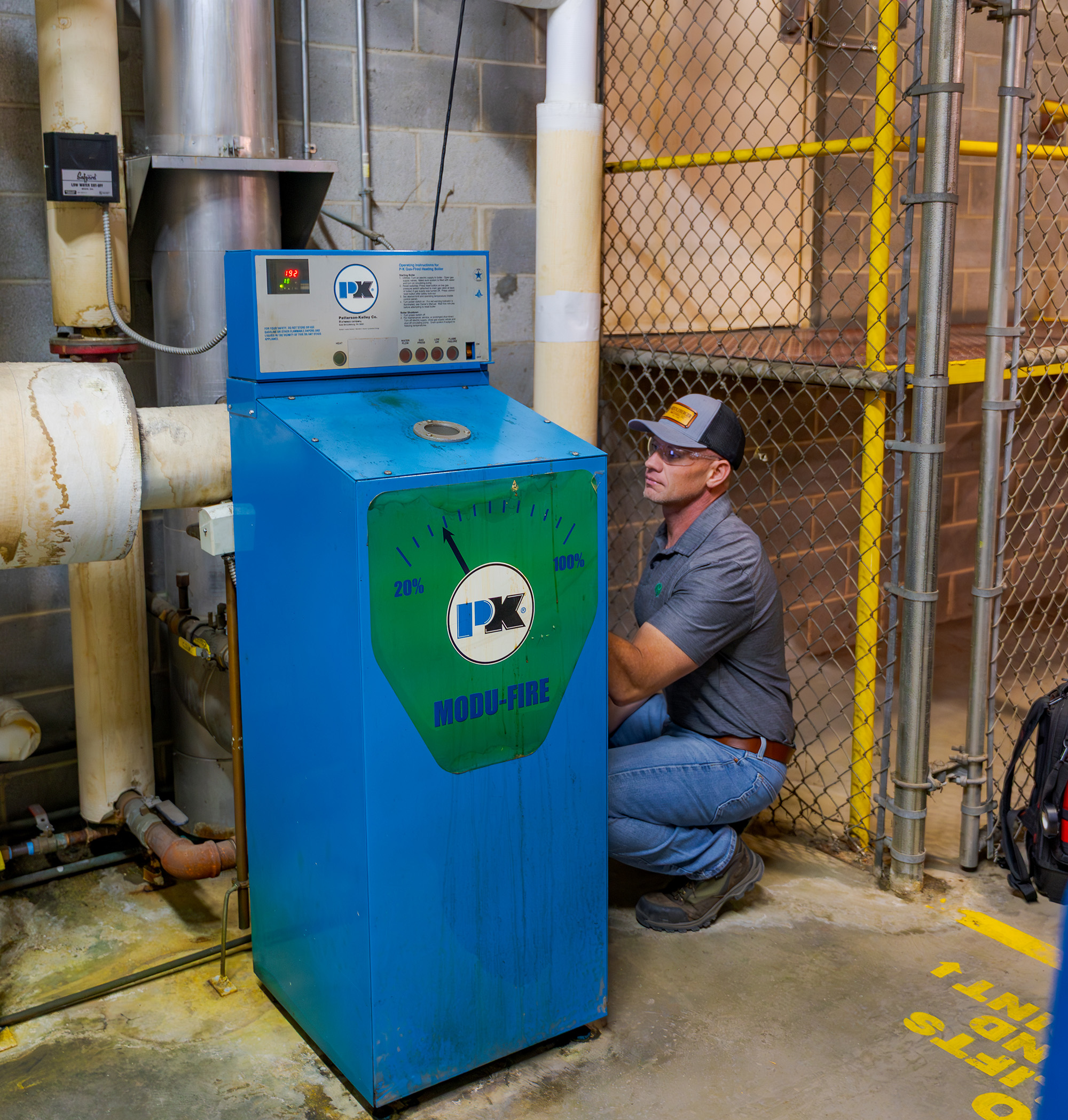
- Technicians use a portable combustion analyzer equipped with sensors and a probe that is inserted into the boiler’s flue or exhaust stack.
- Measurements are taken while the boiler is actively firing, allowing the analyzer to capture real-time data on combustion conditions.
The process itself takes only a few minutes, but interpreting the results requires context and expertise. Rather than focusing on isolated numbers, technicians evaluate how multiple readings relate to one another. This relationship between gases, temperature, and calculated efficiency is what provides a clear picture of combustion performance.
Key Measurements and What They Mean
From these combined readings, combustion efficiency is calculated. While this value provides a useful benchmark, it is important to recognize that it reflects combustion performance only and does not account for other system losses such as distribution inefficiencies or cycling behavior.
In some applications, additional emissions such as nitrogen oxides, sulfur dioxide, or unburned hydrocarbons may also be monitored, particularly in regulated environments where emissions compliance is a factor.
Problems Combustion Flue Gas Analysis Can Detect Early
One of the most valuable aspects of combustion analysis is its ability to identify issues before they result in downtime or safety incidents.
Commercial Boiler Flue Gas Analysis FAQs
Turning Combustion Data Into Actionable Maintenance
The value of flue gas analysis is not in the data itself, but in how that data is used. When integrated into a broader maintenance strategy, it becomes a powerful tool for improving system reliability and performance.
For facilities in Virginia’s varied climate, where boilers must perform reliably through cold winters and fluctuating seasons, ongoing combustion verification is an essential part of maintaining long-term system performance.

Along with boiler combustion flue gas analysis, RBI provides additional boiler services to meet the needs of your facility’s systems:
- Boiler Cleaning & Inspection
- Burner Setup & Maintenance
- Refractory Repair & Replacement
- Tube Testing & Replacement
- ASME R Stamp
- Boiler Replacement, Retrofit & Rentals
RBI is a premier full-service plumbing, mechanical, service, controls, and design-build company. We provide custom services tailored to meet your needs and requirements at each stage of your facility’s journey, from helping you find the right boiler equipment to installing and maintaining your system for years to come.